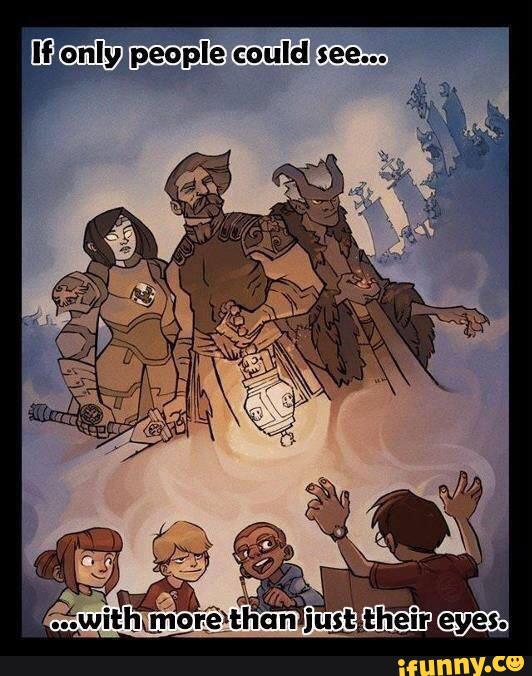
When you are running a game, there is a balance to be maintained between who leads the action. Sometimes it is the DM, but sometimes it is the player who initiates a direction for the adventure. In the cases of DM-guided storytelling, an NPC might direct the players down a certain path, or an event might occur that suggests a need for immediate action. But when players guide the action, it involves their own characters making choices that will develop into new avenues of adventure.
A good campaign requires a sharing of this responsibility. The DM could keep throwing plot developments and events at the players all day, but eventually she will get tired of carrying the burden of the adventure alone. If the players are passively waiting for the DM to tell them where to go or what to do, the game-runner can get fatigued and discouraged. It might also suggest that the players feel confused or shy about taking a proactive role in directing the course of the game. Make sure they understand that your role is not dictatorial, but that they have the ability to make their own choices related to their character and actions.
There's a flip side to this as well: If you are not contributing enough material as a DM, your players will focus on creating their own entertainment. This can manifest as far-out or outrageous actions, flights of fancy and digressions. If your players start instigating conflicts or following red herrings of their own design, it often means that they are not engaging with the adventure as you have presented it. You need to find out what your players want from the game and present some adventuring options that would entertain them more than their own hijinks.
As I said before, balance is the key. Make it clear that the players can take an active role in their quest, but keep presenting interesting content that fills their characters' lives with compelling adventure.
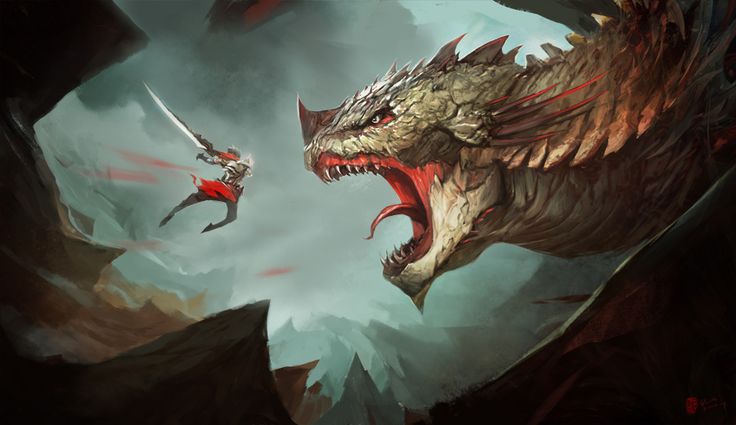
When the DM is driving the action, a dragon attacks the town and its citizens cry for help. When the player drives the action, your paladin decides to travel to the town square and preach the word of their chosen diety. Either of these scenarios could lead to a compelling scene or adventure hook. It's best to have a mixture of both types in your adventures. Not only does it encourage cooperation between players and DM, it also provides a more diverse fount of creativity that flows from your entire gaming group.
Keep this in mind when you are running a game. Present adventures that your players can engage with and encourage your group to take an active role in their characters' destinies!
Happy ventures!
Showing posts with label Building Blocks. Show all posts
Thursday, September 1, 2016
Tuesday, July 5, 2016
The Art of Listening
Running a great tabletop campaign isn't just about talking out loud, describing scenery, and voicing NPCs. There is a large portion of the game that a game master will spend in silence, biding their time and taking in all the activity and table chatter as the game group confers.
Listening is key to good game mastery! The players are the focus of any good adventure, so the spotlight needs to spend a lot of time on them and their characters. There are a few helpful techniques that can be used to know when to listen carefully and how to use the information you receive.
First, remember that the game master does not need to be involved in every scene, or every moment, in a game. When players have a group conference, or even a one on one interaction, there is not much for the game runner to do besides observe. Let the group have their moment to sort out their thoughts and act out their characters. Provide a lot of these moments to let the group interact with each other rather than directing everything to the DM.
When they stop to talk strategy, remain attentive and learn from their conversation. What are they planning? Will it be direct or subtle? Are there any risks involved? The benefit of this process is that you can know what to prepare for the next encounter based on what they are talking about.
Sometimes you might even hear the players bring up a detail you hadn't originally considered, allowing you to work it into your plans. If they plan on talking to the chief of security, you'd best make sure you have something planned for that scene. If they suddenly worry that they may have tipped off their enemies with their last radio transmission, you might need to ask yourself if you want to make that true or not. Your players can provide you with plenty of creative fodder if you take the time to listen.
Another thing to listen for is important information from character dialogue. What is important to the PCs? What is it they fear? The subjects a character chooses to talk about, and how they choose to phrase things can tell you a lot about them. Sometimes they might also give you insight into the players' actual feelings as well. You can tell if a player is bored or excited, allowing you to adjust the direction of the game in response to their mood. Learn when to become quiet and gauge your audience before moving to the next scene. And it's okay to reverse the roles and let yourself become the audience as you enjoy watching your players create their own fun for a while.
It also pays to listen in while you are still occupied by something else. Even when you are just preparing your notes, it can be helpful to keep an ear out for your players' remarks. Don't let it become a distraction, but remember that an overheard remark from a player could be very important to your planning and preparation even as you continue to work on it.
I often emphasize the importance of asking questions at the game table, and that advice applies DMs as much as players. Don't feel shy about asking players to repeat themselves so you can understand, or asking them about their thoughts or plans if you are unsure. Make eye contact with the player so they feel engaged and reminded that their input is just as important as yours to keep the game on track.
In general, a good game master will want to be as attentive as they expect their players to be. Listen carefully when a player declares an action, speaks a line of dialogue, or asks an out of character question. If you show this respect and consideration to the player, they will be more likely to do the same for you. This is DMpathy in action, the mutual symbiosis shared between player and DM. If you apply this give and take to your game, your players will be all the happier for it.
Happy ventures!
Thursday, June 30, 2016
Organization and Book Keeping
A noteworthy detail of pen and paper gaming is that it requires a lot of just that... putting pen to paper. There is a lot to track over a long term campaign, so it is important that those character sheets are detailed and extensive. For this reason I recommend setting aside a block of time during each game session to review and modify these sheets in collaboration with your players. This is in addition to tracking your own DM notes, of course.
Many players are easily confused by the wealth of information that can be contained on a character sheet, and even the most experienced players can make mistakes. That's why I find it useful to "fact-check" the sheets every few sessions, correcting any inconsistencies or errors. While you shouldn't shame players for their mistakes, it doesn't hurt to give them a hand in keeping up with their record-keeping.
Experience point rewards and character advancement are another important kind of book keeping to make time for. While it can be done by players individually before a game session, I recommend doing it at the game table so that the players can collaborate and share their choices when leveling up. You might also handle divvying up loot and other narrative rewards at this point in the game, in order to avoid slowing things down by providing it right in the middle of the adventure.
Paperwork can be a very challenging aspect of tabletop gaming, so it helps if the GM and players are all working together to keep things recorded and organized. All participants should be encouraged to take notes and record details that might be helpful to them or the game master. And certainly don't let them forget to make note of any change in their hit points or condition!
Finally, it is important to address the risk of losing track of a character sheet or having it damaged. It's probably a good idea to take a picture of pages that have been updated a lot recently, so they can be reproduced if this occurs. For my home campaign I keep my own notes and most of the players' character sheets in a binder by my desk between sessions so they don't get lost or forgotten. For digital files, it's best to save copies of the documents to an online file storage service, like Drop Box or Google Drive. That way you can access them from any computer with internet access. After all, it would be very frustrating to see your epic quest fall apart due to a technical malfunction!
Happy ventures!
Experience point rewards and character advancement are another important kind of book keeping to make time for. While it can be done by players individually before a game session, I recommend doing it at the game table so that the players can collaborate and share their choices when leveling up. You might also handle divvying up loot and other narrative rewards at this point in the game, in order to avoid slowing things down by providing it right in the middle of the adventure.
Paperwork can be a very challenging aspect of tabletop gaming, so it helps if the GM and players are all working together to keep things recorded and organized. All participants should be encouraged to take notes and record details that might be helpful to them or the game master. And certainly don't let them forget to make note of any change in their hit points or condition!
Finally, it is important to address the risk of losing track of a character sheet or having it damaged. It's probably a good idea to take a picture of pages that have been updated a lot recently, so they can be reproduced if this occurs. For my home campaign I keep my own notes and most of the players' character sheets in a binder by my desk between sessions so they don't get lost or forgotten. For digital files, it's best to save copies of the documents to an online file storage service, like Drop Box or Google Drive. That way you can access them from any computer with internet access. After all, it would be very frustrating to see your epic quest fall apart due to a technical malfunction!
Happy ventures!
Tuesday, June 28, 2016
Flavor Text: Preparation and Use
![]() |
| Critical Role's Matt Mercer, a Dungeon Master of evocative flavor text |
Flavor text is still important, though. While it is possible to ad-lib the descriptive imagery of your campaign, having the occasional pre-written paragraph will help you on multiple levels... It gives you a break from having to improvise all your lines, it provides you with practice with phrasing things clearly, and it is usually prepared with more attention to detail than something you might come up with on the spot.
The most difficult aspect of flavor text to me is that you might spend a lot of time preparing it only to have players miss any opportunity to hear it read aloud. If you prepare pages of description of a haunted castle only to have your players opt for an adventure in the sewers instead, you might feel like you wasted a lot of your valuable prep time.
That's why I like to keep my flavor text loose and modular. There's no need to overdo description as if you were writing a full blown novel. Instead, it's important to focus on the essence of the story you want to convey. Here's how...
If nothing else I like to write down a list of keywords that seem evocative of the environment the players may find themselves in. For a hospital, this might be: Clean, sterile, pristine, quiet, brightly lit, somber... these are building blocks that might help with improvising on a basic level. Remember that these need to take into account all five senses. Just like a good book, the narrative is more immersive if it's about more than just what you see but also what you smell, feel, hear, and so on.
Next I will write out the descriptions for things that I am sure the players will encounter. A vital NPC or quest-giver, the main villain, the party's home base. I keep these short and sweet. No description needs to be longer than a line or two. Too much prose can bog down the pacing of an adventure.
Finally I will add whatever text I might or might not use. This part is just for fun, if I have extra time and feel creative. This will include descriptions of certain people, places, and things that the players might run into. I will often use the key words I made up earlier and mix them into these descriptions as needed. If these descriptions don't come up in the adventure, no problem! I might recycle them in a future session, using the description of a room or monster at a future point when it might be relevant.
Flavor text is one of the most iconic aspects of the DM's narrative patter. It shouldn't be neglected. Rich, elaborate descriptions of the game world can make a game more exciting and fun. But there is no need to feel pressured to write pages of these details in preparation for an adventure. Do what you can, and learn to improvise the rest. Have a handful of sentences ready to set the scene and make it memorable, and keep those keywords in mind when you get stuck. Remember to remind your players about their surroundings in the game world in a fun and engaging way. A memorably described scene is the first step to a memorable encounter, so have fun with the process of writing and creating your own tabletop world!
Happy ventures!
Thursday, June 23, 2016
Get a Clue: Providing Hints to Your Players
There always comes a point in your game mastering career in which your group will get thoroughly stumped. Especially with new players, there will come a time in which they just don't know what their next move should be. You don't want your game to grind to a halt, so it often requires action on your part to get things moving once again. When this happens, you should remember to follow a few simple rules to clue your players in on what they could do.
Be friendly.
Don't let your players feel bad about needing a a helpful cue. If the entire group is stuck on a problem, it is very likely that you may have missed providing them with important context. In any case, shame or embarrassment isn't a productive emotion at your game table. Be encouraging when you present the players with new information, and don't make a big deal about the fact that you are offering some extra help. Keep it as seamless and casual as possible.
Keep it subtle.
Give them a starting point from which they can draw their own conclusions. Point them in the direction of an answer. A favorite tip of mine is to remind them to check their character sheets. Often there is an ability or tool that they have not considered that could be the key to progression. Remind your players that their character sheet is a list of the special and unique ways their character can influence their environment and tasks that they can accomplish.
Be open to ideas and suggestions.
You don't always have to shepherd your players to a particular course of action when they get stuck. Sometimes it is as simple as reminding them that the GM will welcome their own ideas and inspirations. "Make me an offer," is a good attitude to have. "How do you think you want to handle this?" Let the players present you with an option rather than vice versa. In this way, you're offering encouragement more than dropping a hint.
Ask Questions.
You can also provide the players with inspiration indirectly by asking them your own questions. This is an easy way to provide a hint while letting the players come to their own conclusion. "How do you want to break into the vault? Did you notice anything odd about the prince's behavior?" These kind of questions highlight things that the players should be aware of or consider without directly instructing the player on their next course of action. That's your main goal, to help the players reach their own decision and feel a sense of personal agency.
Be patient.
Don't rush to throw out new suggestions and information right away. For a lot of players, preparation, discussion, and problem-solving are an entertaining part of the entire process. If your players are having fun, don't interfere with it. Wait until you notice signs of actual frustration before you jump in with a hot tip. A big part of game mastering is watching and observing your players and their interactions. It also gives you a chance to rest and prepare game notes in the meantime. Listen to what your players are planning and thinking so that you can provide them with the proper information when they are ready, and so you can be prepared for their next action.
Don't panic when things get bogged down.
There's always a way through for players and game masters alike to keep the session fun and exciting. Remember these methods and you won't leave your players helpless when the game gets tricky. Provide them with some helpful prompts, listen carefully to their questions, and you will have your campaign back on track in no time.
Happy ventures!
Tuesday, June 14, 2016
Character Creation: Background Notes
When you get a group of adventurers gathered round the table for a new pen and paper escapade, it pays to establish some details about their characters' history and defining features. However, it is very easy to make the mistake of under-preparing or over-preparing when producing this information, which can result in some problems later in your campaign. That's why today I'd like to share my best advice for devising concise, useful notes that describe a PCs background and defining characteristics.
First off: I strongly recommend that all players are given an opportunity to prepare these notes before the game begins. Take a little time at the first session to walk the players through a few questions about their characters. These questions pertain to the basics of their new character's identity. You may ask two or three, something along the lines of:
What was your character's childhood like? Why did they choose their current career? What motivates them to adventure with this group?
If they simply answer these questions with a single statement, that's enough to get them started. If they are inexperienced, or short on ideas, they could draw inspiration from their favorite character from books, movies, or television. And if you want to make things even easier to coordinate, you might even invite the players to gather and create their characters cooperatively, in a sort of prologue session before the game begins. That way the players can familiarize themselves with each other's backgrounds and integrate their storylines and roles in the party.
This brings me to my next point... keep the backstory light. I highly discourage players bringing extensive notes on their character's history and personal details. There is rarely enough time for every player to read pages of exposition, and it puts the group in the uncomfortable position of becoming an audience for your own narrative, or setting aside your detailed synopsis with a "Too long, didn't read."
One or two paragraphs, tops. That's all that is needed to establish the basics of a character. The rest is far more interesting when presented through role play in the campaign itself. Encourage the players to follow the old creative writing standby of "show, don't tell." Instead of learning that the wizard started out a pauper from exposition, give her the opportunity to reveal more when she meets an urchin in need. Instead of hearing about the death of the gunslinger's parents in a tedious monologue, see what happens when he finds out their killer has been seen in a nearby township. Let the party learn more and more about each other organically as the campaign progresses.
Speaking of which, there is another trick that will help all of this go smoothly... leave lots of blanks to fill in later. There will be so many opportunities to add details to a character's backstory during the campaign, so don't waste your chance by telling their whole story right away. Especially when they can find ways to tie their story in with the other characters and the setting itself. They might ask for their character to be in the same thieves' guild as another player, or a former student of a prestigous military academy that their team is now visiting. Better to leave some options open than to remove the possibility of adding these elements at a later point.
You want the characters to think about their characters' backgrounds enough that they have a starting point for playing out their motivations and behaviors. But you also want the flexibility for them to develop a backstory over time, the ability to collaborate with the group, and to convey their character concept clearly and concisely. If you follow these basic guidelines, your players should have a head start when it comes to understanding their new character. Keep it light, keep it simple, and keep it fun!
Happy ventures!
Tuesday, May 24, 2016
Passing the Time: In-Game Chronology
This is something both players and GMs should keep in mind, and it needs to be performed on both the short-term sense as well as in the big picture. By short term, I mean that you should be sure describe the passage of time whenever you can. When a player takes an action, consider how much time it will take to perform, and don't be afraid to make it a substantial. Explain that it took a few minutes to pick the lock of the next room, a few hours to find the contact the party needed in town. Don't be shy about implementing these passages of time, it's how you fill up a day of a PC's adventuring so it actually seems like a march of progress rather than a sprint to each thirty second encounter.
On a macro level you want to include opportunities for long term story progression... maybe instead of hours, it takes days to find that contact that the party needed. Maybe they have some downtime between missions, and it lasts a week or two. A journey to the capitol might take a day or two to complete. It's probably not a good idea to spend a lot of time having the players act out this passage of time, but the point is to let the time pass in-game. Allow the characters to grow over time, to live and exist in the imagination even if it is "off screen." Events can also occur during this period that don't immediately involve the player characters. It allows for more opportunities for new adventures and plot developments as the world grows and changes.
Include the description of time passing in broad strokes. Keep things moving ahead. You'll have so many more story opportunities. NPCs will be able to change and grow, players will be able to plan and execute long term strategies, and their will be a greater sense of scope and progress. When you spend so much time building an imaginary world and playing in it, why not give its inhabitants a chance to experience and live in it? These things take time, so be sure you have given it to them!
Happy ventures!
Thursday, May 19, 2016
Reward Triggers
When a player takes an action and gets something they want, it triggers a very basic and universal response in their brain. It's a universal stimulation, similar to the kind of enjoyment we get from interacting on social networking sites, playing video games, painting a picture, or cleaning the house. Those activities stimulate an influx of dopamine through our systems, a neurotransmitter that makes us feel good when we are productive or creative.
But it isn't just triggered from getting a reward, it has to be earned. There needs to be a clear cause and effect connection between the character's action and the positive results. This is why players often enjoy a result more if they rolled a dice or moved a token before it happened... it makes them feel like they did something more active that resulted in their victory.
These moments of triumph are a vital part of the tabletop experience, and will come up at some point in your games whether you recognize them or not. You can take advantage of this natural instinct in order to keep your group entertained and satisfied during gaming sessions.
Remember to reward them often enough that they feel a sense of progress and achievement when they perform an action. Describe the positive results of their action in an evocative manner. Don't just gloss over something when they get it right... let them know for sure that they have succeeded and show them the results.
And, as mentioned before, there needs to be some way of making the player feel like an active participant in order to get the full effect. This could involve rolling dice or moving a token or miniature, but it can often be as simple as having the player clearly state and describe their action. If the player feels like they are the catalyst for their own achievement, it becomes a reward trigger in their mind... a good feeling and sense of satisfaction that comes from getting the job done.
There are lots of things that players can do that provide this satisfaction, but it is up to the GM to identify the ones that appeal to a particular player and providing opportunities for it to happen. It could be:
- Learning a secret nobody else knows (Getting a secret note passed to them)
- Gaining a new piece of cool loot (Getting to write it on their character sheet)
- Dealing damage to enemies (Rolling a critical hit)
- Winning a social encounter (Having an enemy NPC bow in reverence and respect to them)
Happy ventures!
Thursday, May 5, 2016
Measuring Gameplay by Dramatic Beats
Recently I have been reading the Leverage RPG core book by Margaret Weis Productions, which uses the very narrative-focused Cortex Plus system. It's the ideal system for running capers and heists that play out like an episode of a television show. One of the more useful nuggets of insight that I gleaned from my reading was the idea of dividing gameplay up into dramatic 'beats.'
This doesn't mean you need to structure your game with mechanical precision. Rather, it's a way of thinking about the action playing out before you that allows you to organically develop scenes in a way that avoids complication or confusion. It's a way to build a mental flowchart on the fly, and ask yourself "what needs to happen next?"
A dramatic beat represents a single in-game occurrence and its consequences. It could be a single action undertaken by a character, or a number of related actions. The point is that it has a cause and effect that can be described and played out in a few moments... like a thief setting off a secruity system while trying to crack a safe. The next beat might be either an escape attempt, or a fight with the local guards. It's all about marking out each event and set the stakes for the next one.
Thinking like this can be useful in any game system, really. Sometimes it can be difficult to run a game when you don't know what your players are going to do next. You find yourself trying to think several minutes ahead, like a chess grandmaster, in an attempt to develop the adventure toward some exciting conclusion. By thinking in beats, you are separating the action into a series of moves, just like on the chessboard. This allows you to focus on the next move coming up, rather than having to plan six moves ahead. You are simply saying to yourself, "Once they complete action X, then Y will happen."
When you break it down like this, even fight scenes can be charted out with this method. In a fight with an ogre, a series of beats might be...
Rondar the Warrior attacks the ogre several times, driving it back to a precipice.
The ogre grapples with Rondar, but he pulls away just in time.
Rondar bull rushes the ogre, knocking him off the cliff!
This is a way that you can delineate the action and establish the cause and effect for segments of this conflict. The three beats could each include more than one attack and action, but they each represented a change in the nature of the fight... moving to the cliff, the ogre trying to toss the warrior over the edge, the warrior victorious. So when the DM is running this fight, rather than looking at the big picture, they are taking it beat by beat... the ogre wants to throw the warrior, the ogre is endangered by the cliff. And when something is getting boring, they simply decide on the next dramatic beat (Such as "The ogre calls for his orc reinforcements") and move from there.
If there are more than one characters with different goals, those can be represented by multiple dramatic beats, and you can 'edit' the scene to cut back and forth between their actions dramatically, spotlighting each character in turn. The more simply you can define a beat, the easier it is for you to know how to manage it by calling for dice rolls and making judgement calls as the DM.
Each dramatic beat leads into the next, so the process is as simple as step one, step two, step three. At its core this simplifies the game into building blocks, providing a clear direction for each moment of your campaign. I'm going to keep this method in mind the next time I run a game. I hope this, or a similar technique, will prove useful to you in your own campaigns.
Happy ventures!
Tuesday, May 3, 2016
Building an Improvisational Toolbox
It's always good for a DM to have detailed notes and cheat sheets handy to reference when running a game. For instance, a list of names for NPCs that you have to create on the fly. But I like to take this concept a step further, especially when I am running a game based around a very loose framework which will require a lot of improvisation.
When it comes to these situations I keep more than just a quick reference of game rules on hand. I also have an improvisational toolkit that I call a Lore Sheet. This record is just a simple table printed from a word processor with a list of concepts and names that I could work into a narrative, tailored to the specific setting of the game. It has a list of names apropriate to the setting, occupations, types of enemies that might be encountered, and even titles for places and historical events.
Most of these concepts are ones that I have not developed any further than their names that I put on the sheet, but they are a starting point for a creative process. The basics that I recommend are Enemies, Challenges, Locations, Items, Names, and Historical events... but each sheet may be different based on the needs of your campaign and the style of your setting. I even include common props and window dressing, so that I can describe vivid scenes in detail without having to read off a script word-for-word.
More detail is really neat and fun for your players, and provides fodder for more storytelling. Let's say your players ask about the history of a certain place that you hadn't fully fleshed out yet. You look at your Lore Sheet and read off a couple of events: "The Winter Accords," and "The Hyborian Wars," so now you have a couple of ideas for historical background. Similarly, when they step out on the streets of Neo-Tokyo, you can pull from a list of props like "Data kiosok," and "video billboard," for "Alphanumeric Limited" which is blaring music from a list of genres like "technocore." It's all about building a toolbox of resources... whatever you might conceivably need when the campaign gets rolling.
My cyberpunk Lore Sheet currently includes a list of street foods, names for computer programs, megacorporations, and brand names. In one section I listed a bunch of ideas for encounters to challenge the players, like a fight in an elevator shaft or a laser grid security system. It's all about making everything run as smoothly and creatively as possible.
A lot of my Lore Sheets contain material that I cribbed from various existing works of fiction, like the name of the Weyland-Yutani Corporation from the Aliens franchise. Don't be afraid to borrow ideas from other media for your own games. There is no worry about copyright infringement at the privacy of your game table, and there's no shame in copying from the greats. You may trawl the internet for ideas to fill out the sheet, it really helps add some fun details and allusions to a game session. Then add a few original ideas of your own, when you have time to relax and get creative. This way you don't have to make up every detail on the spot, during the time crunch of the game itself.
Remember, anything that frees you from additional effort gives you more brain power to focus on other matters of game running. It keeps things more relaxed, efficient, and fun, and I highly recommend keeping notes like these very close when your next tabletop adventure kicks off.
Happy ventures!
(To learn about another tool that can be useful when improvising behind the DM screen, check out my previous entry about Story Cubes)
When it comes to these situations I keep more than just a quick reference of game rules on hand. I also have an improvisational toolkit that I call a Lore Sheet. This record is just a simple table printed from a word processor with a list of concepts and names that I could work into a narrative, tailored to the specific setting of the game. It has a list of names apropriate to the setting, occupations, types of enemies that might be encountered, and even titles for places and historical events.
Most of these concepts are ones that I have not developed any further than their names that I put on the sheet, but they are a starting point for a creative process. The basics that I recommend are Enemies, Challenges, Locations, Items, Names, and Historical events... but each sheet may be different based on the needs of your campaign and the style of your setting. I even include common props and window dressing, so that I can describe vivid scenes in detail without having to read off a script word-for-word.
More detail is really neat and fun for your players, and provides fodder for more storytelling. Let's say your players ask about the history of a certain place that you hadn't fully fleshed out yet. You look at your Lore Sheet and read off a couple of events: "The Winter Accords," and "The Hyborian Wars," so now you have a couple of ideas for historical background. Similarly, when they step out on the streets of Neo-Tokyo, you can pull from a list of props like "Data kiosok," and "video billboard," for "Alphanumeric Limited" which is blaring music from a list of genres like "technocore." It's all about building a toolbox of resources... whatever you might conceivably need when the campaign gets rolling.
My cyberpunk Lore Sheet currently includes a list of street foods, names for computer programs, megacorporations, and brand names. In one section I listed a bunch of ideas for encounters to challenge the players, like a fight in an elevator shaft or a laser grid security system. It's all about making everything run as smoothly and creatively as possible.
A lot of my Lore Sheets contain material that I cribbed from various existing works of fiction, like the name of the Weyland-Yutani Corporation from the Aliens franchise. Don't be afraid to borrow ideas from other media for your own games. There is no worry about copyright infringement at the privacy of your game table, and there's no shame in copying from the greats. You may trawl the internet for ideas to fill out the sheet, it really helps add some fun details and allusions to a game session. Then add a few original ideas of your own, when you have time to relax and get creative. This way you don't have to make up every detail on the spot, during the time crunch of the game itself.
Remember, anything that frees you from additional effort gives you more brain power to focus on other matters of game running. It keeps things more relaxed, efficient, and fun, and I highly recommend keeping notes like these very close when your next tabletop adventure kicks off.
Happy ventures!
(To learn about another tool that can be useful when improvising behind the DM screen, check out my previous entry about Story Cubes)
Tuesday, April 26, 2016
Room for Improvement
The trickiest part of this process is, of course, identifying the parts of your games that need improvement. The simplest method of doing this is asking your players. After the end of a game I will often ask my players what they liked or disliked about the session so that I can make adjustments for next time. It's best to wait a while after the session ends before asking this, to give your players a chance to rest, converse, and reflect on the game. Don't press the issue, but listen to your players if they have some concerns about the way the game went. This is the opportunity to make your players feel comfortable about sharing their thoughts on things and to invite them to make those thoughts known.
Another way of spotting problem areas is to note any moments of obvious confusion or trouble that might crop up during the game. If there was a particular event in your game that caused it to slow down or stop, something that needed to be corrected or undone, that's something that you can aim to avoid in the future. Don't make a big deal about it at the time it happens, but once your game is finished you will want to figure out how to avoid the issue in the future.
Finally, you also want to look at the parts of your game that are already going well and figure out how to make them even better. Don't settle for adequacy when you have the opportunity to optimize your campaign. Use this opportunity to think as a writer, an engineer, or an inventor. Innovate and improve upon what's working, and remove whatever doesn't fit. Keep moving forward.
Some examples of what I'm talking about include:
- Placing a sticky note of a rule you keep forgetting in a prominent place at the table.
- Implementing a house rule to make initiative easier.
- Having a separate area for snacks so that they don't spill onto the game table.
- Seating a very hands-on player closer to the map so they can reach it.
- Collecting more minis or tokens for setting up battlefields.
- Describing the players' critical hits in more detail when they strike enemies.
- Resolving to spend less time flipping through the rulebook.
Happy ventures!
Tuesday, March 29, 2016
Character Creation Part Two: Assigning Roles.
"Know Your Role"
When your players build their characters for an adventure, choosing their roles and assigning values to their skills and abilities, it is best for you to keep in mind how the group will fit together as a whole. One of the key principles behind any good RPG is that each character fulfills a unique purpose and gets to do something special that nobody else can do. If there are two characters of almost identical design, it is likely to cause a problem. Someone is going to feel left out if another party member is just as good at everything their character is geared towards.
This is why it is important to establish who is playing who in any given campaign before the game begins. Don't push it off until later, when your PCs are already stepping on each others' toes and arguing about which of their two computer hackers gets to break into the mainframe this time. If two players want to play characters that are functionally identical, discuss with each of them how they might adjust their plans to keep their characters from being redundant.
Overlapping Roles
This is not to say that there can be no overlap between the strengths and abilities of two player characters. It can actually be a lot of fun to have two similar but different characters team up and work together.
The rule of thumb to use when determining whether two characters can co-exist effectively is this: Do they use different methods to achieve the same results?
If so, it shouldn't be a problem for them to both operate on the same team. For instance, a thief who is a master of disguise could pair very well with one who is a cat burglar. A bard and a sorcerer are both charisma-based magic users who have very different techniques. An armored warrior and a nimble fighter could each bring their own flair to a heated battle. There is no problem with having multiple characters of the same class or archetype as long as they are designed to behave differently when put into action.
The issue of identical characters is not quibbling over who gets to play what, it's a matter of avoiding situations in which a player character becomes the "spare tire" that isn't really needed. You could still run a game with a party of all wizards, or all fighters, as long as you make sure each of them has a unique style that doesn't entirely duplicate another player. It's fine to have two characters with a lot in common, just don't let them share so many of the same features that they are indistinguishable.
Variety is the key! If you have a game with a party of police officers, they should each still have abilities and skills that make them unique, like the SWAT guy, the detective, and the negotiator. Don't let players play bland or generic characters, let them play a role that has distinction and a lot of character. Consider classic superhero teams like the Sailor Scouts or the Power Rangers, where the heroes have powers that are similar, yet each has a unique weapon and special strength, like the brains of the operation or the charismatic one. Don't obsess over making every character absolutely different from every other party member, just stick to these general principles and your game will be just fine.
Fulfilling a key responsibility on the team is a big part of a players' enjoyment of the game, so it is important to make sure each player has their own. Sometimes you might even run campaigns that have pre-set positions to be chosen from, like the classic Dungeons and Dragons configuration of Fighter/Wizard/Thief/Priest. This is all well and good, but it is not the only way to play. There are plenty of ways to run games without including certain character classes at all. It's all about having a game plan before the campaign starts, and knowing which role each of your players will take on. Consider all of this carefully before the scenario launches and you will be on your way to a fun and successful party of player characters!
Happy ventures!
When your players build their characters for an adventure, choosing their roles and assigning values to their skills and abilities, it is best for you to keep in mind how the group will fit together as a whole. One of the key principles behind any good RPG is that each character fulfills a unique purpose and gets to do something special that nobody else can do. If there are two characters of almost identical design, it is likely to cause a problem. Someone is going to feel left out if another party member is just as good at everything their character is geared towards.
This is why it is important to establish who is playing who in any given campaign before the game begins. Don't push it off until later, when your PCs are already stepping on each others' toes and arguing about which of their two computer hackers gets to break into the mainframe this time. If two players want to play characters that are functionally identical, discuss with each of them how they might adjust their plans to keep their characters from being redundant.
Overlapping Roles
This is not to say that there can be no overlap between the strengths and abilities of two player characters. It can actually be a lot of fun to have two similar but different characters team up and work together.
If so, it shouldn't be a problem for them to both operate on the same team. For instance, a thief who is a master of disguise could pair very well with one who is a cat burglar. A bard and a sorcerer are both charisma-based magic users who have very different techniques. An armored warrior and a nimble fighter could each bring their own flair to a heated battle. There is no problem with having multiple characters of the same class or archetype as long as they are designed to behave differently when put into action.
The issue of identical characters is not quibbling over who gets to play what, it's a matter of avoiding situations in which a player character becomes the "spare tire" that isn't really needed. You could still run a game with a party of all wizards, or all fighters, as long as you make sure each of them has a unique style that doesn't entirely duplicate another player. It's fine to have two characters with a lot in common, just don't let them share so many of the same features that they are indistinguishable.
Variety is the key! If you have a game with a party of police officers, they should each still have abilities and skills that make them unique, like the SWAT guy, the detective, and the negotiator. Don't let players play bland or generic characters, let them play a role that has distinction and a lot of character. Consider classic superhero teams like the Sailor Scouts or the Power Rangers, where the heroes have powers that are similar, yet each has a unique weapon and special strength, like the brains of the operation or the charismatic one. Don't obsess over making every character absolutely different from every other party member, just stick to these general principles and your game will be just fine.
Fulfilling a key responsibility on the team is a big part of a players' enjoyment of the game, so it is important to make sure each player has their own. Sometimes you might even run campaigns that have pre-set positions to be chosen from, like the classic Dungeons and Dragons configuration of Fighter/Wizard/Thief/Priest. This is all well and good, but it is not the only way to play. There are plenty of ways to run games without including certain character classes at all. It's all about having a game plan before the campaign starts, and knowing which role each of your players will take on. Consider all of this carefully before the scenario launches and you will be on your way to a fun and successful party of player characters!
Happy ventures!
Thursday, March 17, 2016
Embracing the Spirit of Challenge
I have been both player and DM when this problem has surfaced. Sometimes it is something as simple as the DM being afraid to let any PCs die, or suffer significant setbacks after failing an encounter. It's nice that the DM is worried about their players and player characters, but there needs to be a balance. Somewhere between the antagonistic and apathetic "Killer DM" who seeks the destruction of the players, and the friendly game-runner who just wants to see his players win all the time lies a happy medium.
If your game is too easy, you will start to see symptoms soon enough. Players will start to actively pursue more difficult encounters and challenges in an attempt to test out the difficulty of the campaign. If they are consistently successful and impervious to any major consequences, then you risk boredom and the stagnation of your gaming sessions.
Oddly enough, some players may also begin to get increasingly paranoid about failing the simplest of tasks. This is why you want to show your players that they can overcome setbacks when they happen. You want your players to want to avoid negative consequences but accept them when they occur. Don't make your players afraid of failure. If a die roll goes badly and you soften or refuse to recognize the bad result, it's going to do just that. It's going to make the players feel like the consequences are so bad that even the DM doesn't want to administer them. Like an over-protecting parent, you make the PC afraid of the world around them. It's an unhealthy attitude that leads to either a lack of challenge in your games or a crippling sense of fear and reluctance to act from your players.
If the players accomplish every single thing they set out to do, it's not a game. It's not even a story. Stories require conflict. They require obstacles to interact with and overcome. The enjoyment we get from achievement comes from the fact that it is earned through persistence. Make each die roll count, remember to only roll when it really matters. Let there be truly compelling challenges and consequences in your campaigns. Let the players struggle and fight for their victories. Don't abuse them, but encourage them to stand up to the obstacles you present them with and find their triumph. You want an environment in which it isn't always easy to win, but it's possible and surmountable. There's no real satisfaction in a victory unearned, so make the challenge fit the reward. Then you can have truly satisfying moments for your gaming group, and fun stories that can be remembered and retold for days to come.
Happy ventures!
Tuesday, March 8, 2016
The Hundredth Post: 100 Random Observations (Part One)
To celebrate the hundredth entry here on DMpathy Blog, today I proudly present one hundred random observations and tips from the top of my head. Thanks for reading, and I hope some of these tidbits come in handy in your own game running endeavors!
- Rogues: If you steal FROM your party instead of FOR your party, you will surely be left to rot in the darkest dungeon.
- Speaking of rogues, scouts should always be sure that they don't distance themselves from the party without a backup for contacting them if things go sideways.
- It's all too easy to rush players from one mission to the next. Let them have some down time occasionally to role play and manage resources.
- If a scenario is not going according to plan as a DM, change the plan and take it in a new direction.
- If you find something a player really enjoys, that's your carrot on a stick to keep them motivated during your campaign.
- Tracking supplies like ammunition and payload should be dependant on how much the players enjoy resource management, not a mandatory chore.
- Random tables should still be modified and tailored to your current adventure so they add to the experience rather than detract from it.
- It's always a good idea to watch other DMs and find out what you can learn from their techniques.
- Rather than just threatening players with damage during combat encounters, hit them with other conditions, or place their resources or allies in jeopardy.
- Social and mental encounters need clearly established goals for each party involved, and you should be sure that you know everyone's motivations and allegiences before you run the encounter.
- I always consider the battle map itself to be an ally or an enemy to the players.
- It's always good to recognize early if your players are not following a plot hook. Give them more reasons to be interested if the first one doesn't work.
- As a DM, conspiring with a player is a great way to pull off the whole "shape-shifter replaces a teammate" trick.
- Mind control or simple deception is the most effective way to threaten muscle-bound but weak willed combatants. Turn their strength against themselves or their team!
- Letting your players describe their own attacks is a great way to get them engaged in the action.
- ...And don't forget to allow your players the opportunity to deliver witty one-liners along with those attacks.
- If one of your players is causing distress in your gaming group, always try to address them outside the game rather than making it an issue at the game table.
- Remember the old idiom "If you stat it, they will kill it." Make sure your favorite villains have some sneaky backup plans for escaping and surviving.
- Remember that even Lawful Good characters could make for appropriate antagonists if they are sufficiently misguided.
- Reworking cliches into something new and different works just as well as avoiding them altogether.
- Keep things moving at a brisk pace if you can. If one player is still mulling things over, consider offering the next player to prepare their own turn.
- If players are new to as system, try introducing the game with a half-hour "tutorial" encounter where you cover the basic game mechanics.
- If you provide your party with NPC reinforcements, you might offer them the opportunity to play these reinforcements themselves, like bonus characters.
- If the party doesn't have a healer, make sure there is some sort of mechanic like healing potions or special medicine to keep the game balanced.
- I like to close out every game session with a unique song from my personal playlist, like the credits roll at the end of a movie.
- Don't just run a game because you want to be the center of attention: be a DM if you enjoy the process of creating and coordinating adventures.
- The best surprises to spring on your players are the ones they realize they should have seen coming.
- One shot, single-session adventures are fun ways to break up monotony and offer players a new gaming experience.
- The term "noob" doesn't need to be part of our vocabulary. Welcome new players to the table without judgement.
- A DM is not a god, they are the players' guide to the world of adventuring.
- Spend at least an hour of prep time in order to have a successful game session.
- Decide how you are going to handle lethality and character deaths at the beginning of your campaign, in collaboration with your players.
- Don't roll the dice unless you are ready to accept their results as being the deciding factor of an event.
- You don't have to start a campaign at level one, you can begin at whatever point you feel would make for a fun game.
- Don't panic if something doesn't go according to plan when you are DMing. Call a time out and arrange your thoughts.
- Cultural references can be really fun, but don't overdo it. Original humor is still better than rehashed jokes.
- Initiative tracking can be complicated. Consider employing a player to help you manage it properly.
- Sometimes the real world gets in the way of game night. Try not to hold it against players if they frequently miss game night, but be honest with them if their inconsistency is causing problems.
- Character death is scary, but still not as scary as a long-lasting character injury.
- I personally don't like forcing players to deal with clunky currency conversion systems. No copper/silver/electrum pieces if I can avoid it.
- Giving your player a mentor character is a good way of previewing some of the powers and abilities they will be capable of in the future.
- Bottlecaps from beers and sodas make really easy to find tokens or "fate points."
- Sometimes your players will relentlessly follow red herrings that you didn't even intend to lay out. Enjoy the resulting hilarity.
- Have a list of miscellaneous names on hand for people, places, and things. You'll be amazed by how many times you will need it.
- Keep track of which players have had more of a spotlight during each session. Try to give each one their own time to shine.
- Practice calm, steady delivery of DM narration. Take a deep breath and take things slowly when you speak to your group.
- Props and handouts are a fun addition to any campaign. Don't underestimate the benefits of a nice looking visual aid.
- Don't take the rules too seriously. As long as everyone is having fun, it is a successful game session.
- If it makes for a cool scene, consider bending the rules to allow it to happen. Fun trumps everything, every time.
- You don't need to stat out every enemy and NPC in the world. Design them as a general outline and work out the rest of their details on the fly.
TO BE CONTINUED...
Tuesday, March 1, 2016
Tabletop Gaming as a Popular Activity
Why is tabletop gaming not more popular as a mainstream recreation? Why does it remain such a niche pastime? In a world of comic book movies and mass marketed video games, it's still a hobby that is considered by a lot of people to be "geeks only."
I think part of that is based on the way a lot of groups play, which can be kind of over the top with silly voices and play-acting (A style that I indulge in myself a lot of times.) But the bigger problem is that it is difficult to organize a real high quality tabletop RPG session. At least not without running into the challenges of time, resources, and having the right kind of group to play with.
When you go to the movies, play a video game, or read a book, you can choose your own time and place to do it. You are immersing yourself in the creativity of an artist who has risen to the top of their field, who has honed their craft, and you know that they wouldn't have gotten that far without demonstrating some talent in their medium. When you play Dungeons and Dragons, you have to hope that you find that kind of creative mind in your own hometown, be friends with them, and coordinate a time when you can all get together with a space available to meet in.
I was talking to a Dungeon Mastering friend once, and we agreed that just about everyone has a story about a bad DM experience, and for most people it is also their first experience with gaming. That's a big mark against the hobby right there. Something like four out of five dungeon masters will run a game that is just not as much fun as your standard video game or comic book.
The players might keep playing because there is still a core appeal that hooks people in even if the material they are playing is bland. And keep in mind, that I have struggled with these short-comings when running my own games. I am far from a perfect DM, and my choice to deal out advice doesn't come from a sense of superiority, but from wanting to share my experiences and ponder the inner workings of what makes a fun game.
The problem is that a lot of DMs don't ask the question "What can I do better?" Whether it doesn't cross their mind or they are afraid of the answer doesn't matter. The point is that a big part of being the GM or DM is learning how to develop your techniques of problem solving and resource management just as much as your players.
That's why a lot of game-runners have problems if they are not used to being in a position of leading or coordinating things. If your personal issues with ego and authority crop up during a game, it can be disastrous. I have personally found myself on either end of that problem, as I have run some bad adventures myself.
The trick is to never let yourself get discouraged. Pick yourself up and keep writing and using your imagination. And don't let your worries that it won't be good enough keep you from running games. Practice makes perfect. Put your best ideas out there first and foremost, don't try to store them all up for later. Your imagination isn't finite, you can always come up with something new and improved. Start by building on your best material and keep reading your players and learning from them. Check in with them whenever you can, and ask them what they want more of in your games, what they like and dislike.
I have a rule that after every game I find one thing that I can improve for the next session. One thing, every time. Even if it's something as small as changing the placement of the maps and miniatures on the table, or having extra pencils or dice on hand. Sometimes it might be remembering to add more traps or making a list of the most frequently used skills so I can provide more challenges related to those skills. The point is, it's best to be constantly improving because there is no such thing is perfect and if game mastering is something you enjoy, you should certainly enjoy doing it better.
Happy ventures!
I think part of that is based on the way a lot of groups play, which can be kind of over the top with silly voices and play-acting (A style that I indulge in myself a lot of times.) But the bigger problem is that it is difficult to organize a real high quality tabletop RPG session. At least not without running into the challenges of time, resources, and having the right kind of group to play with.
When you go to the movies, play a video game, or read a book, you can choose your own time and place to do it. You are immersing yourself in the creativity of an artist who has risen to the top of their field, who has honed their craft, and you know that they wouldn't have gotten that far without demonstrating some talent in their medium. When you play Dungeons and Dragons, you have to hope that you find that kind of creative mind in your own hometown, be friends with them, and coordinate a time when you can all get together with a space available to meet in.
I was talking to a Dungeon Mastering friend once, and we agreed that just about everyone has a story about a bad DM experience, and for most people it is also their first experience with gaming. That's a big mark against the hobby right there. Something like four out of five dungeon masters will run a game that is just not as much fun as your standard video game or comic book.
The players might keep playing because there is still a core appeal that hooks people in even if the material they are playing is bland. And keep in mind, that I have struggled with these short-comings when running my own games. I am far from a perfect DM, and my choice to deal out advice doesn't come from a sense of superiority, but from wanting to share my experiences and ponder the inner workings of what makes a fun game.
The problem is that a lot of DMs don't ask the question "What can I do better?" Whether it doesn't cross their mind or they are afraid of the answer doesn't matter. The point is that a big part of being the GM or DM is learning how to develop your techniques of problem solving and resource management just as much as your players.
That's why a lot of game-runners have problems if they are not used to being in a position of leading or coordinating things. If your personal issues with ego and authority crop up during a game, it can be disastrous. I have personally found myself on either end of that problem, as I have run some bad adventures myself.
The trick is to never let yourself get discouraged. Pick yourself up and keep writing and using your imagination. And don't let your worries that it won't be good enough keep you from running games. Practice makes perfect. Put your best ideas out there first and foremost, don't try to store them all up for later. Your imagination isn't finite, you can always come up with something new and improved. Start by building on your best material and keep reading your players and learning from them. Check in with them whenever you can, and ask them what they want more of in your games, what they like and dislike.
I have a rule that after every game I find one thing that I can improve for the next session. One thing, every time. Even if it's something as small as changing the placement of the maps and miniatures on the table, or having extra pencils or dice on hand. Sometimes it might be remembering to add more traps or making a list of the most frequently used skills so I can provide more challenges related to those skills. The point is, it's best to be constantly improving because there is no such thing is perfect and if game mastering is something you enjoy, you should certainly enjoy doing it better.
Happy ventures!
Thursday, January 14, 2016
Character Creation Part One: When and Where
No RPG campaign can begin until you have a party of interesting adventurers to take into action. But how and when you create and stat these characters is a question that must be answered early on in your process of game preparation.
The first and easiest technique is to provide pre-made characters for your players. This is often advantageous for one shots or introductory adventures, and it is a good idea to have these ready made character sheets on hand in any case so that you can use them as back ups for new players or if someone falls in battle. This doesn't allow your players the option of customizing their characters much, but for those who have never played a tabletop RPG, it may be a better option to introduce them to the concept of the game without too much complication to start out. It's a great pick-up-and-play option for players, despite the extra work that might be required from the DM.
Another popular method is to fill out character sheets as a group, either during the first session or at a separate session dedicated solely to character creation. This allows the maximum degree of collaboration amongst your players, and is a very good idea. They can make choices based on how their characters interact with each other as well as how their backstories and motivations tie in to each other. The more connection and coordination between players there is, the better the potential for your campaign. If there are problems with syncing up schedules to conduct this creation session, you might try using an online group to connect your players and get it done. Whatever you do, try to avoid a situation where some of the players have to sit and wait while others build characters. It's not so fun for the waiters, and can really throw off the momentum of your game session.
Finally, you can let the players create their own characters and bring them to the session. If you take this option, my number one piece of advice is this: always preapprove character concepts. Either review the character yourself, or present it to the group. By character concept, I mean the basic pitch for your character class and theme. There's no reason to keep that a secret before the session begins, and a single out of place character can bring an adventuring party to ruin. Work with your players to assemble a set of characters that will complement one another and fit together for the planned adventure.
Ask yourself: Will this character be able to work effectively with the rest of the team? Like an evil thief on a team of detectives.
Will they interfere with the role of another party member? Like identical trap-finding rogues fighting over who gets to search the room.
Will they work against the themes of the campaign? Like a fighter who doesn't believe in magic in a setting full of flying carpets and genies.
![]() |
| A varied party that works together can achieve wonders! |
Regardless, don't ever go in blind when it comes to assembling a new party. Always know who is playing what so that you can prepare for it accordingly. And ideally, your party should also know ahead of time so they can collaborate as well. (This obviously doesn't apply to convention games or events, where your group might just be whoever showed up with a character sheet. But those typically require more experience with flying by the seat of your pants. They may not be ideal, but you can make them work anyway. I don't recommend using them as a model for your own gaming group's campaign.)
Now let's cover the biggest "Don'ts."
- Don't abuse your veto power as a DM by discouraging creative choices.
- Don't play favorites with your players. Focus on how the characters will work together in the game to have the most fun and smoothly running game sessions.
- Don't let players bully you into giving them special treatment. Keep things equal and fair, focusing on creating an enjoyable experience.
Happy ventures!
Tuesday, January 12, 2016
Five Surprising But Common Problems That Ruin Games
![]() |
| Artistic depiction of a player dealing with these common mistakes. |
These particular problems are surprisingly common among game groups, even if they may seem easily avoidable at first glance. I have played with several different game runners, and many of them fell prey to at least one (if not all) of these issues. And yet some of them avoided making these mistakes altogether. These significant errors can affect any DM or gaming group, but they are especially common among groups that are just starting out or have inexperienced DMs. If this ever happens to your party, there is no reason to make anyone feel bad about it, but it should be corrected before it causes the game to get too boring or disorganized. With no further ado, here are five of the most common pitfalls of game mastering and how to address them.
5. Too much dice rolling
"You want to search the drawer for the treasure map? Roll your perception...*Rolls* You don't find anything." *Players can't continue adventure without the map*
Whenever you call for a roll, there is a chance of failure. Don't force players to roll so frequently that they fail basic actions or become afraid of taking actions because of those failures. Have the players ask before they roll dice, limit the randomness to situations in which you can work around the possibility of failure. And NEVER make the players roll the dice multiple times until they succeed at something. That's just silly.
Suggested reading: Don't Roll Them Bones Unless You Mean It!, Fudging The Dice: Honesty Behind The Screen, Slaves to the Dice
"Now that you have killed the guild master, you... Oh man, let me think... I didn't plan for this, guys. It's all messed up...Umm..."
We all get nervous, we all get stressed. Even the most skilled DM runs into situations they hadn't accounted for. When this happens, take a deep breath and take your time. Put the game on pause for a moment if you need to and let the players enjoy snacks and conversation while you collect your thoughts. Don't panic or give yourself anxiety over the game. Your outward energy effects the group, and negativity will begin to snowball if you let it start getting to you.
The second worst thing to hear from a DM is "Uh oh," or "Oops." The absolute worst thing to hear is "I'm sorry," because it suggests that you don't have a way to fix things, it makes everyone feel bad that something is going wrong, and it puts the players in an uncomfortable position with a lot of nervous tension.
Believe in yourself and your ability to correct mistakes. You can do it. You can apologize for any snags and snafus after the game is over, but focus on the good that you can do going forward rather
than the mistakes you have made in the past.
Suggested reading: When To Become DM, Sharing With Players and Clear Communication
3. Lack of direction/too much freedom
"Now you've killed the town guard, broken into the winery, forged a letter from the mayor, and saved a random orphan from some wild dogs... what was your quest supposed to be again?"
Lay out a clear objective when a new campaign begins. The DM always has the initiative in the opening scene to establish where the players are and what they are doing. The mission should be clear and present to the players. Don't force them to wander around town looking for work or coming up with reasons why they should care about the quest to fight the goblin clans. Make sure there is a premise for the campaign that is clearly defined and some very apparent directions the players could take to follow their mission.
New players will often abuse the creative freedom of tabletop RPGs to act out and do unproductive and chaotic things. You can curtail this politely by providing lots of cues and hints to direct players toward the main quest and more constructive actions. If the players still don't care about the objectives of the campaign, you might need to re-assess what they want out of the game and make some changes to the planned adventure.
Suggested reading:Running a Tabletop Adventure For New Players, Raising the Stakes, Keeping Bad Guys Bad, Sharing With Players and Clear Communication
2. Annoying NPC
"Ha ha! Looks like you ragamuffins need a helpful guide to lead you through The Jungles of Eternity! Never fear, I will protect you bunch of scalawags from your own mischief! Ho ho!"
This obnoxious son of a gun shows up so often that I can set my watch by his appearances in a campaign. For some reason, many DMs feel the need to vicariously commentate or antagonize the players through an NPC that follows the party around on one or more missions. They might range from incredibly powerful to the point of overshadowing the player characters to helplessly weak and constantly getting into trouble. The one thing they all have in common is that they are way too involved in the game. They talk too much, hog the spotlight from the players, and generally get in the way. They often criticize or ignore player characters, and provide more irritation than entertainment.
If your players need guidance you can provide that out of character with polite side notes as a DM. Don't use an NPC as a sock puppet, and don't force players to work with characters that will be unpleasant with no recourse. If you are a DM, your main goal is to provide an adventure for the players to experience and enjoy, not your own non player characters.
Suggested reading: "The DMPC Must Die!", Players Make the Game!, A Conversation With Myself: NPC Interactions, Friend or Foe? The End of Adversarial Game Mastering
1. Player versus player
"The paladin squares off against the thief for purloining The Sacred Tome of Azura, despite the fact that the established purpose of this quest has always been stealing this artifiact."
Here's a tip to avoid a lot of grief and inconvenience in your first campaign: Always vet and approve player characters before the game begins. Make it clear what the adventure is going to be about, and how the party is going to work together as a team. I can't tell you how many times I have seen a new party descend into in-fighting and bickering because nobody was coordinating with the group when they designed their characters. Everybody built characters of different alignments and allegiences, one of the players started working against the group's interests, nobody worked together to establish any history between the characters as a team... it's all so easily avoidable yet all too commonly a problem.
If your players don't want to play characters who work together, then your game is a bust before it even begins. A little conflict or drama can add spice to a campaign, but if your party can't work together then your game is going to fall apart in short order. So collaborate with your players and solve these issues before the game begins. Make sure everyone is on the same page about their roles and relationship to the group. Make sure everybody is ready to get along and your campaign will run much smoother for your efforts.
Suggested reading: Link: Regarding the Phrase "I'm Just Playing My Character", Character Motivations, There's No "I" in "RPG"
Happy ventures!
Subscribe to:
Posts (Atom)